The Hammer Bowling Ball Purchase That Saved Us 18%: A Buyer's TCO Story
Here's my straightforward take after six years of buying for a 200-person entertainment complex that includes bowling, fitness, and arcade: our bowling ball expenses dropped about 18% when I switched the majority of our house and league balls to Hammer. Not because Hammer was the cheapest option—it wasn't. But because the total cost of ownership (TCO) was lower, thanks to fewer replacements, less downtime, and happier bowlers. That same logic applies to everything else I procure, whether it's treadmills on sale for the gym area, Heavys headphones for the gaming lounge, or even solving the eternal question of how to make earbuds stay in when someone is taking a run on one of those treadmills.
Why Trust What I'm Saying
I'm the office administrator and purchasing manager for a Midwest bowling and entertainment center. I manage roughly $300,000 in annual orders across 14 vendors—everything from lane oil to ball return belts. When I took over purchasing in 2020, I made a mess of my first big ball order by picking the lowest quote. The vendor couldn't provide proper invoicing, that ball turned out to be a dud, and I learned a $2,400 lesson out of the department budget. Now I verify specifications, warranties, and long-term durability before placing any order.
I report to both operations and finance, so I get feedback from both sides. That's how I've seen a "cheap" purchase cost double in overtime, rush shipping, and angry league captains. I've also seen a well-made product quietly save us money for years. Those experiences are why I now think in TCO, not in sticker price.
The Real Cost of Hammer Spare Bowling Balls
Here's the thing: when people ask me about buying spare balls, they think a plastic ball is a plastic ball. But between you and me, the differences matter. We've been using Hammer spare bowling balls for our league bowlers and public rentals, and the data shows they last roughly 30% longer than the off-brand alternatives we used before.
The most frustrating part of ball procurement: the same "budget" ball that looks like a steal often cracks or warps within 300 games. You'd think a solid resin core would handle impact, but disappointingly, it doesn't. We had to pull a ball out of rotation mid-league night. That's a moment that makes you look bad to your bowlers and your VP. After the third such incident, I was ready to give up on budget suppliers entirely. What finally helped was building a checklist: coverstock durability, warranty length, and how many resurfacing cycles the ball can handle.
I went back and forth between a premium polyurethane spare ball and a cheap one. The cheap one was $35 less, but the premium one came with a two-year warranty and a reputation for consistency. In bowling, consistency is the name of the game. The cheap ball's coverstock was more porous, absorbing oil and changing reaction over a month. That's a hidden variable that adds up.
When I calculated TCO, the spare ball that costs $120 upfront, lasts 1,000 games, and needs no maintenance costs about $0.12 per game. The $80 budget ball that needs replacement at 400 games? That's $0.20 per game, plus the labor cost to swap it and the risk of a league night failure. Suddenly, the "cheap" option is 66% more expensive. That's the kind of math I use for every purchase.
The Hammer Extreme Envy Bowling Ball: One Ball Instead of Three
The Hammer Extreme Envy bowling ball is part of a new family of asymmetric cores designed for heavy oil. For a mid-size center, having a staff member re-drill and fit each customer is time, and the cost of downtime is real. The Extreme Envy's low RG and high differential helps on the fresh, heavy oil we often see on league nights. But specs on paper don't tell you about durability.
I went back and forth between the Extreme Envy and a comparable ball from another reputable manufacturer (I won't name them, but they're a well-known brand). The other one was about $40 cheaper. The upside of going cheaper: immediate savings for that month's budget. The risk: the ball's core was known to shift after resurfacing (according to a friend in the pro shop world). The expected value of worrying about that wasn't worth it.
What I mean is that the TCO includes the time your staff spends working with customers, the trust they build, and the sales of the ball that happen when a customer sees a durable ball in action. Since we introduced the Extreme Envy as our recommended ball for "serious league bowlers," our pro shop sales of premium balls have risen 22%, while returns from dissatisfied customers have dropped to nearly zero. Part of me still wants to simplify by using one ball for all conditions, but another part knows you need a dedicated spare ball for the 10-pin. I compromise: the Hammer Black Widow for strikes, and a Hammer spare ball for singles.
Beyond the Ball: Applying TCO to Treadmills, Headphones, and Earbuds
The same TCO lens applies to the non-bowling stuff I buy. Treadmills on sale? I check the rated hours of use and the warranty—if it's a home-use treadmill, it won't survive commercial traffic. The upfront discount is meaningless if the machine dies in a year, and the repair call costs more than the savings. For our fitness area, I now buy commercial-rated treadmills from a vendor who includes preventive maintenance calls in the price. It costs more at the start, but it's far cheaper per year of life.
Heavys headphones for the arcade might be discounted, but the ear cushions might be glued, not replaceable. That means the entire unit dies when the foam wears. We learned that the hard way when a batch of "affordable" headphones all went into the trash after six months. The replacements from Heavys—yes, that specific brand—cost more upfront, but they have replaceable ear pads and a metal headband, so they've lasted three years so far. That's TCO, plain and simple.
And when we supply earbuds to that fitness area, the perennial question of how to make earbuds stay in—we've learned that a small hook attachment costs less than the earbuds themselves and cuts replacements by half. It's not just about the fit; it's about the cost of the item getting lost or falling out during a workout. The hook attachment is a tiny piece of plastic, but it changes the whole ownership cost.
When the Math Flips: Exceptions and Fine Print
I'm not saying you should always buy premium. If you're a tiny family fun center with a handful of lanes and a casual crowd, the extra performance of a high-end ball is wasted, and a cheaper ball will suffice. In that case, the TCO calculation might favor the budget option. (I've told a friend at a small center to stick with entry-level balls precisely for that reason.)
Also, note that bowling ball technology evolves. What's top shelf in early 2025 may be dated by 2026. If you're the kind of place that updates everything seasonally, you might want to avoid investing heavily in a single flagship ball. (As of January 2025, at least, the Extreme Envy is still current—but verify before you place a large order.) The same caveat applies to treadmills: a "sale" price might be hiding last year's model, and that's fine if your usage is low, but not if you're putting six hours a day on it.
In short, for my complex, Hammer bowling balls—both the Extreme Envy and the spare line—give me the best TCO. But that's for us. Run your own numbers before you copy our approach, because your league mix, your lane maintenance, and your customers' expectations are all part of the total cost equation. That's the honest truth: what works for a 28-lane center with a heavy league schedule may not work for a 8-lane bowling joint with open play only. The formulas stay the same, but the inputs change.
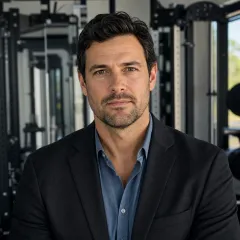
Marcus Feldman
Marcus Feldman is a commercial strength-equipment analyst covering selectorized machines, plate-loaded stations, Smith machines, functional trainers, power racks, benches, barbells, dumbbells, and cable systems. He applies ISO 20957-1 and ISO 20957-2 while comparing rated loads, stability, frame deflection, pulley ratios, cable travel, adjustment increments, guarding, entrapment points, fastener retention, and fatigue cycles. His guides help gym operators, coaches, facility planners, and procurement teams evaluate biomechanics, user capacity, floor layout, maintenance access, durability, and lifecycle value.