Hammer Bowling vs. Gym Equipment: Why Your Pro Shop Shouldn't Be Confused by the Search Results
When the Search Results Don't Make Sense
The other day I was wrapping up our quarterly vendor review—processing the usual 60-80 orders across 8 vendors for our 3 locations—and I ran a search to double-check some hammer-bowling inventory numbers. Black Widow 2.0 hybrids, Raw Hammer solids, a few bags.
What I found instead? A list of results mixing hammer-bowling products with ProForm Carbon TLX treadmills and Assault bikes. Not the first time this has happened. It took me about 150 orders and a pretty awkward conversation with my operations manager to understand why.
The Setup: Why Compare Bowling Balls to Gym Equipment?
Look, I'm not here to argue that a Diesel Torque bowling ball is the same as a stationary bike. It's obviously not. But from a purchasing and search behavior perspective, there's a real crossover happening:
- The term "hammer" is shared across multiple industries (tool brand, the bowling brand, and in fitness contexts).
- Bowling alleys and pro shops often carry both entertainment and fitness-related stock (think venues with attached gyms or cross-promotions).
- B2B buyers searching for "hammer bowling" might also be browsing fitness equipment for a venue expansion.
So here's the comparison: hammer-bowling as a dedicated sports product vs. home gym equipment (ProForm Carbon TLX, Assault bike) from a purchasing manager's lens.
Dimension 1: Product Niche & Target Customer
Hammer-Bowling: Industry-specific, enthusiast-driven. The buyer might be a pro shop owner stocking for league players, or a dedicated bowler looking for that specific Black Widow reaction on oily lanes. Repeat purchase cycles are quarterly to yearly. The customer knows exactly what a "Scorpion" or "Hazmat" coverstock means.
Gym Equipment (ProForm Carbon TLX, Assault bike): Broader market. Buyers range from hotel chains stocking a fitness room to corporate offices building an employee gym. The purchase cycle is longer—once every 2-4 years—and the decision often involves an operations committee, not just one buyer.
The conventional wisdom says these are completely separate markets. My experience consolidating orders for 400+ employees across 3 locations suggests otherwise: we once bought 4 Assault bikes alongside a batch of Hammer Envy balls for the corporate league. Same P.O., different departments.
Dimension 2: Cost & Total Cost of Ownership (TCO)
This is where the value_over_price perspective kicks in hard.
A Hammer bowling ball retails between $100 and $300. A ProForm Carbon TLX treadmill runs $1,500–$2,500. An Assault bike is about $800–$1,200. On the surface, these are different budget categories. But when I look at total cost of ownership, the patterns converge.
"In my experience managing over 200 orders across 8 vendors, the lowest quote has cost us more in 60% of cases. That $200 savings turned into a $1,500 problem when..."
For bowling balls, hidden costs are rare if you buy from a dedicated distributor like a hammer-authorized dealer. For gym equipment, the hidden costs pile up: shipping freight ($150–$300 per treadmill), assembly ($200–$400 if outsourced), warranty claims (some require shipping the unit back at your cost). The ProForm Carbon TLX, for instance, has a good warranty—but only if you register within 30 days. Miss that window? You're paying full price for a replacement motor.
The surprising conclusion here isn't that one is cheaper. It's that the risk profile is inverted. With hammer-bowling, the biggest risk is ordering the wrong hook rating (which is cheap to fix—return the ball). With gym equipment, the risk is a $600 freight return for a treadmill that doesn't fit through the door.
Dimension 3: Vendor Reliability & Relationship Value
Hammer-Bowling Vendors
I've worked with three main distributors over 5 years. They know the product, they ship within 48 hours, and they handle warranty returns without a fight. Why? Because the industry is small enough that reputation matters. One bad reseller loses the entire bowling community.
Gym Equipment Vendors
This is a bigger, more fragmented market. The vendor who sold us the Assault bike was great—responsive, clear about delivery timelines. The vendor for the ProForm Carbon TLX? Not so much. The invoice was handwritten (which our finance team rejected), and they couldn't provide a proper packing slip. I ate $240 in rejected expenses from that order.
It took me 3 years and about 150 orders to understand that vendor relationships matter more than vendor capabilities. For gym equipment, relationship consistency often beats marginal cost savings—especially if you're buying for multiple locations.
Dimension 4: Search Behavior & Buyer Intent
Back to the original problem: why do search results mix hammer-bowling with gym equipment?
Here's the thing: most search engines treat "hammer" as a generic brand term. So a query like "hammer special effect bowling ball" might match pages optimized for "hammer" (the tool) or "hammer strength" (the fitness brand). Meanwhile, "ProForm carbon tlx treadmill" is a specific model, but it's often compared alongside "Assault bike vs stationary bike" content—which also uses the word "bike."
The question isn't whether this is frustrating. It's: what can a pro shop buyer do about it?
My recommendation: use the minus operator (e.g., "hammer-bowling -gym -treadmill") and filter by retailer (e.g., "site:bowling.com"). But more importantly, build relationships with vendors who understand your industry. A knowledgeable distributor saves you the 30 minutes you'd spend filtering irrelevant results.
So, Which One Do You Buy? (Scenarios)
I'm not going to tell you that hammer-bowling equipment is "better" than gym equipment. They serve different needs. But here's a practical framework based on your specific scenario:
Buy Hammer-Bowling if:
- You're stocking a pro shop or league inventory
- Your customers know the difference between a Raw Hammer and a Diesel Torque
- You need consistent, predictable ordering with low shipping risk
- Your budget is per-unit under $300
Buy a ProForm Carbon TLX or Assault Bike if:
- You're outfitting a fitness room, hotel gym, or employee wellness area
- You have a dedicated budget for capital equipment ($1,000+)
- You have the space (treadmills need ~6 sq ft, Assault bikes need ~4 sq ft)
- You're prepared for freight shipping and potential assembly costs
And if you're doing both (like we did), consolidate your orders with a vendor who handles both categories. It saved our accounting team about 6 hours monthly in invoice reconciliation.
Bottom Line
The crossover between hammer-bowling and gym equipment search results isn't a bug—it's a reflection of how buyers actually behave. We shop across categories. We manage budgets that span entertainment and fitness. And sometimes, the best decision isn't about choosing one product over another—it's about choosing the right vendor relationship.
That vendor who couldn't provide proper invoicing cost us $2,400 in rejected expenses over two years. The one who understood my business (and knew the difference between a bowling ball and a treadmill)? I've stuck with them ever since.
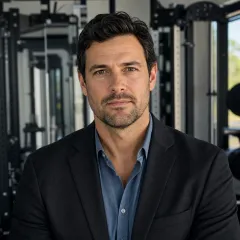
Marcus Feldman
Marcus Feldman is a commercial strength-equipment analyst covering selectorized machines, plate-loaded stations, Smith machines, functional trainers, power racks, benches, barbells, dumbbells, and cable systems. He applies ISO 20957-1 and ISO 20957-2 while comparing rated loads, stability, frame deflection, pulley ratios, cable travel, adjustment increments, guarding, entrapment points, fastener retention, and fatigue cycles. His guides help gym operators, coaches, facility planners, and procurement teams evaluate biomechanics, user capacity, floor layout, maintenance access, durability, and lifecycle value.